MON-FRI: 9:00-18:00 | +39 0431 373334  | segreteria@interportocervignano.it

MON-FRI: 9:00-18:00 | +39 0431 373334  | segreteria@interportocervignano.it

Interport

An Infrastructure Supporting Regional and International Freight Flows

Established with a system-wide vision and supported by public investment, the Cervignano Freight Village operates as an integrated hub for freight mobility. It plays a key role in enhancing the efficiency of combined transport solutions and strengthening the competitiveness of the regional economy.

About Us

The “Alpe Adria” interport in Cervignano was designated as the sole interport in the Friuli Venezia Giulia Region by the Integrated Regional Transport Plan of 1988. This designation defined its strategic role within both the national and regional transport networks.
The Technical-Economic Feasibility Study was finalised in 1990, and the Region then initiated construction, promoting the creation of a joint-stock company with majority public ownership to oversee the planning, construction, and operation of the freight terminal.
The Alpe Adria Interport has been operational since 1998.

Our Headquarter

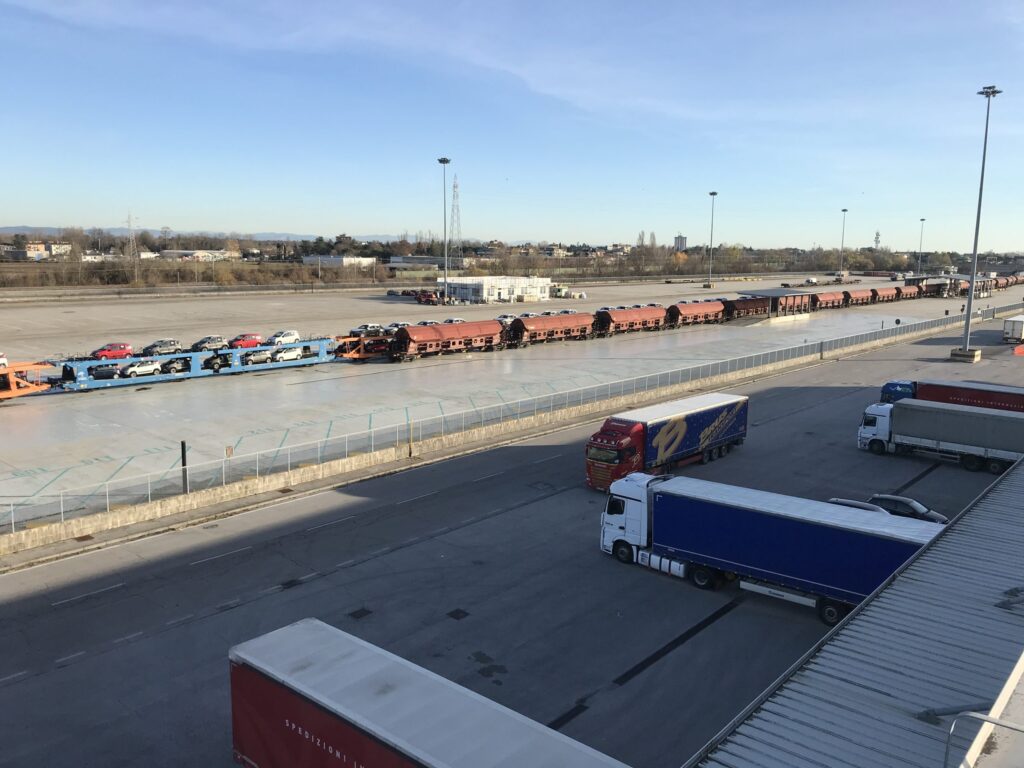
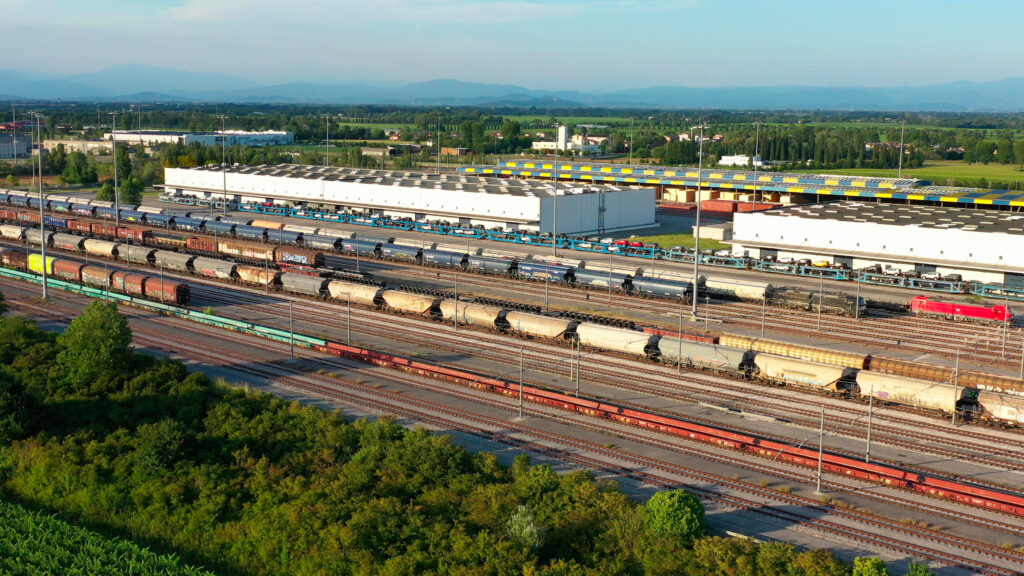
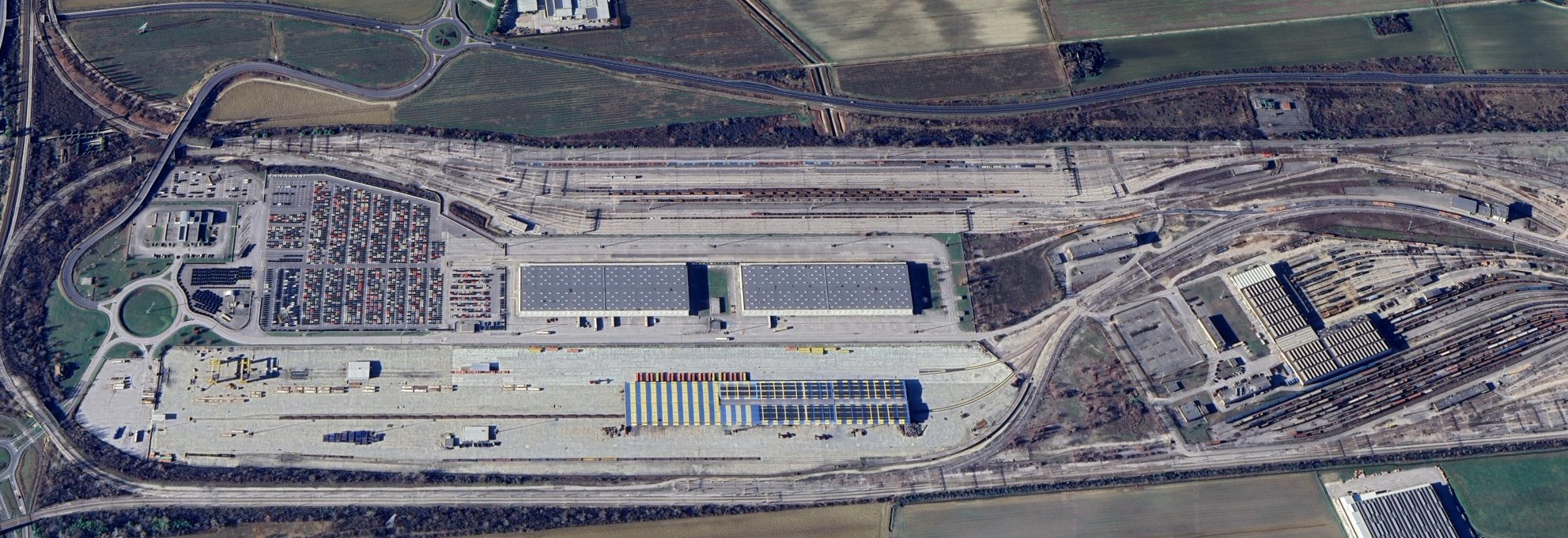
The Interport features 24,000 m² of warehouse space directly connected to the railway network. The facilities are fully monitored by CCTV and equipped with both intrusion and fire protection systems. Each warehouse unit includes office space, restrooms, and a technical area.
At the main site, administrative offices and meeting rooms are also available.
In 2024, Cervignano handled 1,259 trains serving key domestic and European destinations.
Overall volumes included 237,225 tonnes of cargo and 13,425 TEUs.

A Solid Infrastructure

Data as of 2024

24.764

TRUCKS

35.371

CARS

1.259

TRAINS IN/OUT

237.225

TONNES MOVED

13.425

TEU MOVED

6.127

CONTAINER

8

SIDINGS

750 M

RAILS

24.000 MQ

WAREHOUSES

460.000 MQ

STATION

160.000 MQ

INTERMODAL YARD

69.308 MQ

VEHICLE STORAGE YARD

Description

Operations Infrastructure

Train Access and Shunting System

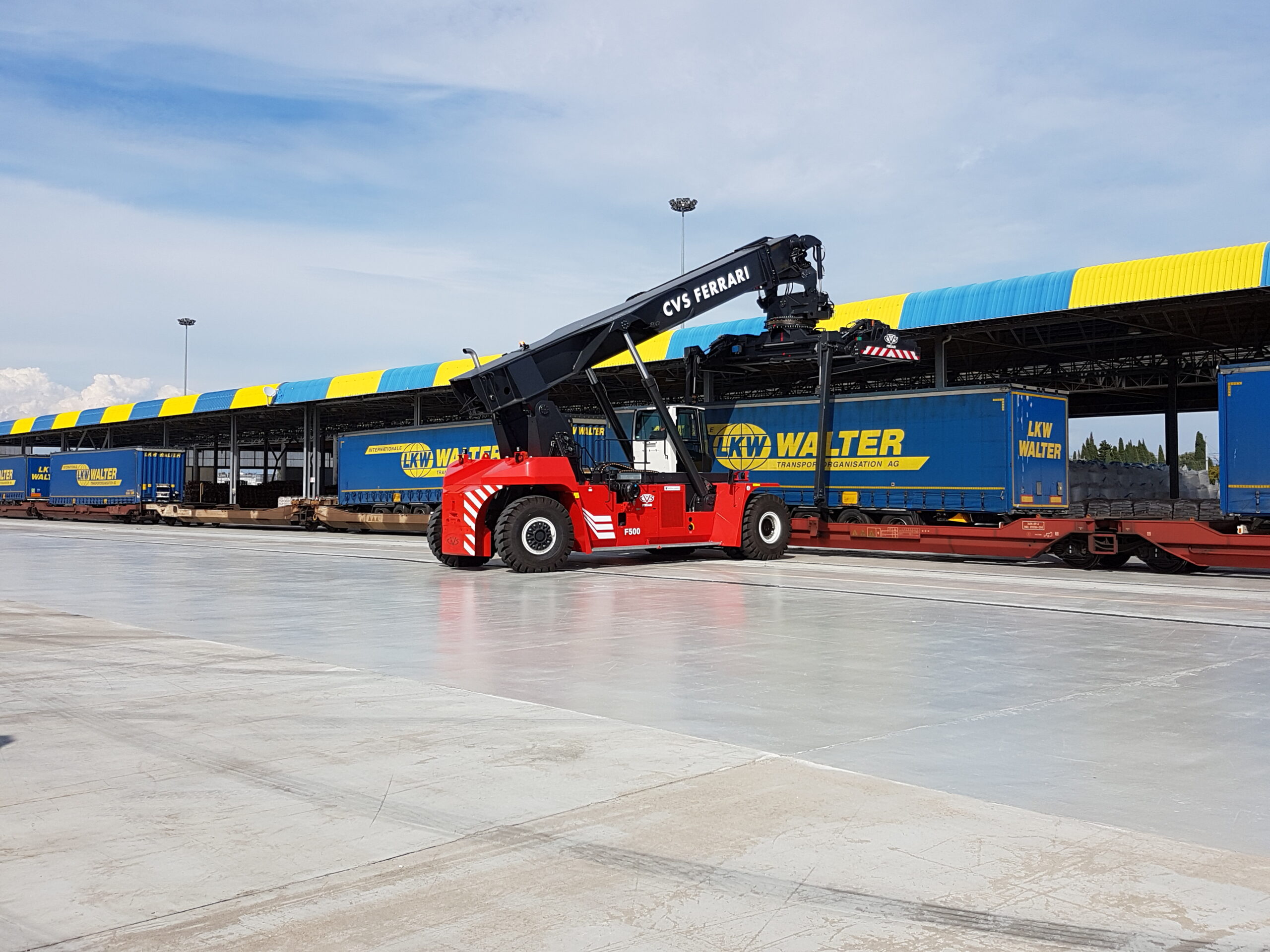
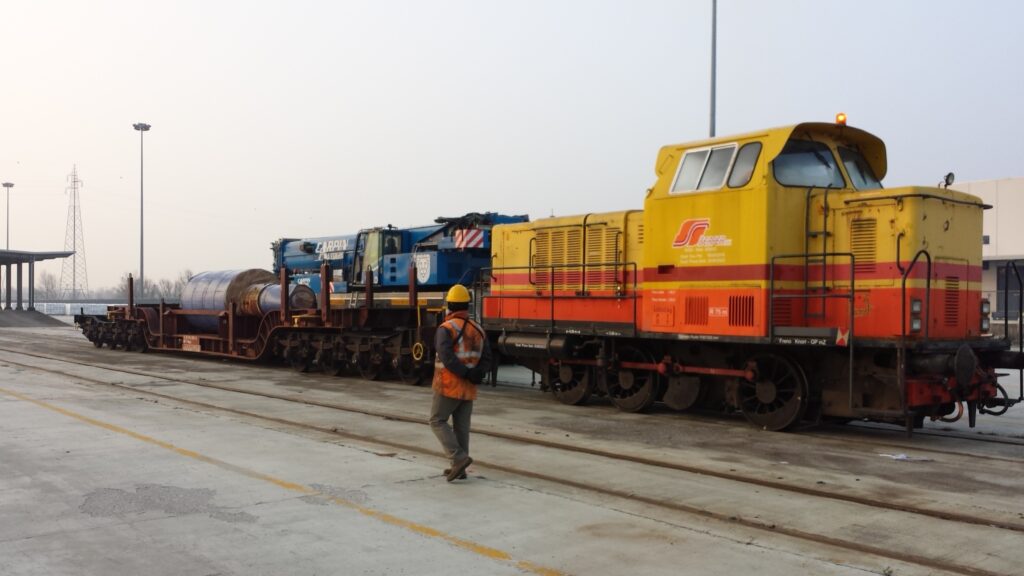
Trains arriving at the Cervignano Shunting Station are transferred by railway operators to the Interport, which independently performs the shunting operations. Trains are brought into the facility via a 610-metre shunting line. The virtual entry point is located at turnout 206a, marking the start of the shunting track. Physical access gates are positioned at the entry to the rail yard.

Shunting services and connection to the marshalling yard

The shunting services are carried out exclusively by the Company and include the terminalisations in connection between the virtual gate and the internal tracks, as well as any other shunting needs within its own siding. The Cervignano marshalling yard is connected to the ‘Interporto Cervignano’ through the shunting sidings, connected to the Container bundle by means of communication no. 206a/206b. The normal position for the left-hand side of turnout 206b ensures the independence of the junction from the tracks of Cervignano Smistamento.

Characteristics and use of internal siding

The sidings are not electrified. Currently, RFI has designated sidings 1 and 2 for pick-up and delivery operations, including loading and unloading. Additional tracks, numbered 3 to 8, connect directly to the shunting area. Tracks 7 and 8 are commonly referred to as “warehouse” tracks.
Traffic destined for tracks 3 to 8 (including warehouse tracks) does not need to pass through the main pick-up/delivery tracks. Tracks 5 and 6 are authorised for the transshipment of hazardous goods.

Vehicle Exchange Protocols

All vehicle handovers between Railway Undertakings (RUs) and Interporto Cervignano take place at the virtual gate at turnout 206a. These operations are conducted in accordance with RFI’s M47 protocol for gate access and extraction procedures carried out by RUs.

Connections

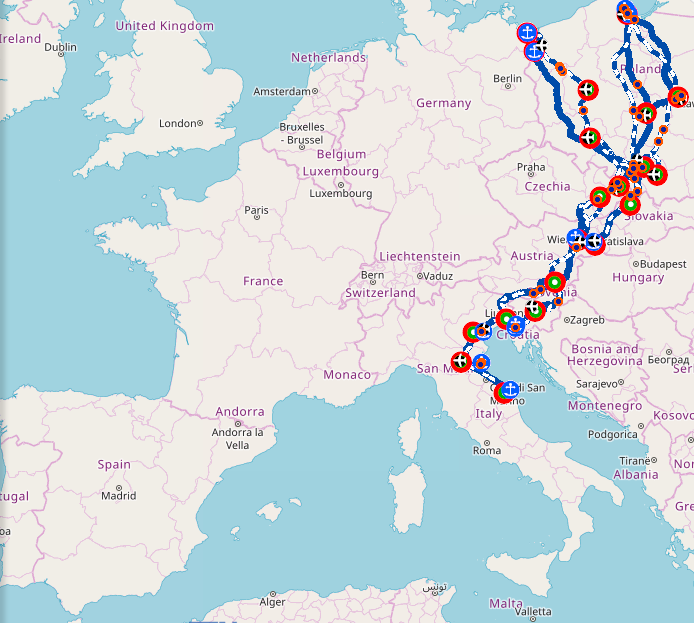
Situated next to the Cervignano rail yard, the Interport lies at the intersection of two key multimodal corridors as defined by the National Transport Plan.

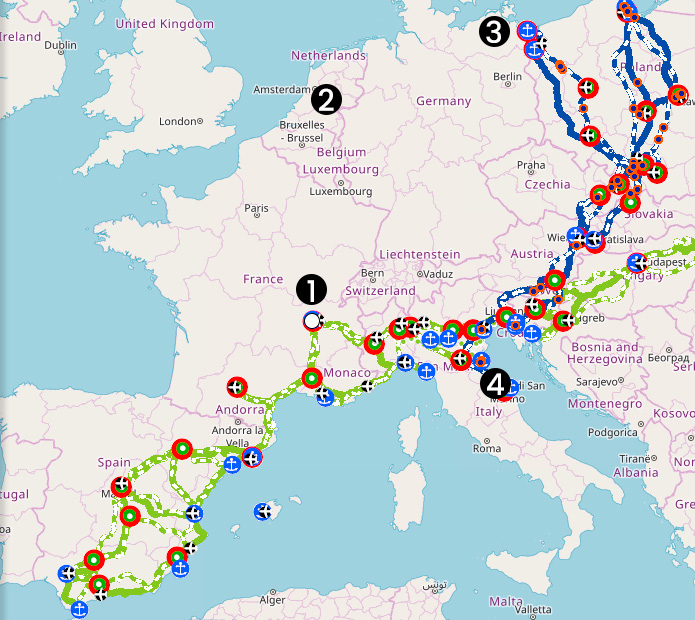
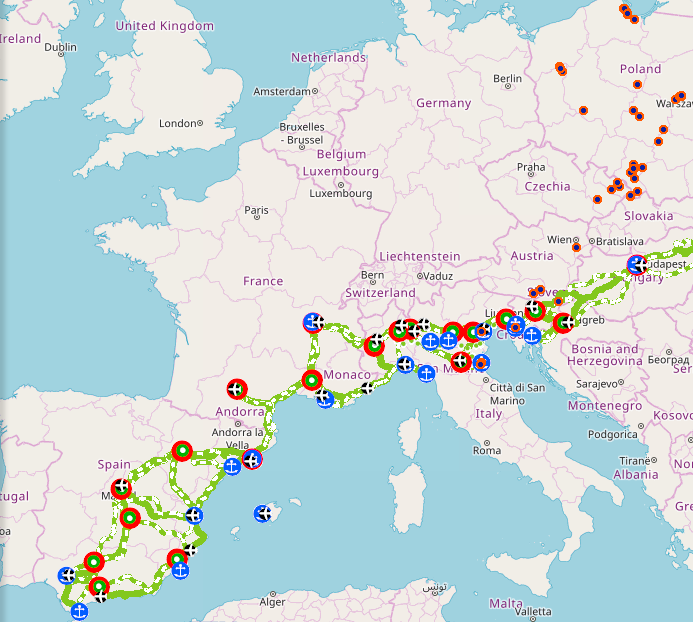
Cervignano occupies a strategic location along: the Adriatic–Baltic Corridor (north–south axis), the Mediterranean Corridor (east–west, from Barcelona to Kyiv)

It is ideally positioned in relation to key ports: Porto Nogaro (11 km), Port of Monfalcone (29 km), Port of Trieste (48 km).

The Interport is connected to the A4 motorway via:
  • The Palmanova toll gate (SR 352, km 7) – Direct access provided by a newly completed bypass
  • The Villesse exit (SR 341, km 11)
  • The San Giorgio di Nogaro exit (SR 14, km 12)
Cervignano Interport is served by the following railway lines:

  • Venice–Trieste (double-track, electrified)
  • Cervignano–Palmanova–Udine (single-track, electrified)
  • Udine–Tarvisio (double-track, electrified)


Inbound trains are delivered to Cervignano’s Shunting Station and are introduced into the facility via a 570-metre dedicated shunting line managed by Interporto.

The Interport is 15 km from Trieste International Airport (Ronchi dei Legionari), accessible via the A4 motorway. The airport serves as a regional hub for air cargo and passenger transport.

TEN-T Corridors

The Trans-European Transport Network (TEN-T) encompasses integrated infrastructure aimed at supporting the EU single market, ensuring the free movement of goods and people, and boosting growth, employment, and competitiveness.
Cervignano plays a strategic role in the Mediterranean Corridor, facilitating flows from the Iberian Peninsula and France to Hungary and enabling connections to both Western and Eastern Europe.

Key TEN-T Routes

As a hinterland terminal for the ports of Trieste, Monfalcone, and Nogaro, Cervignano acts as a central hub for continental traffic along the Adriatic–Baltic corridor.

The Turin–Lyon rail axis is a cornerstone of the Mediterranean Corridor, linking the Iberian Peninsula with Eastern Europe. The regions it serves represent 18% of the EU population and 17% of its GDP.

Following the entry of Duisburg’s inland port operator into the capital of Interporto di Trieste, a new intermodal link was established between Duisburg and Trieste, via Cervignano. Trains run twice weekly, carrying containers and semi-trailers. From Trieste, cargo is shipped to Turkey and other destinations. The frequency of this service will double in May, joining existing routes to Nuremberg and Karlsruhe.

Get in Touch

We’re available to provide full details on our services, connections, and the operational opportunities offered by the interport. Contact us by phone or email – our team will respond promptly.